2025-03-06
Colonial road construction ….. settlers are leveling forests in’ Ras Zaid’ area, southwest of Huwwara/ Nablus governorate
Violation: land leveling of forested areas
Location: Huwwara town, south of Nablus
Date: March,6th 2025
Perpetrator: Settlers
Affected Party: The residents of Huwwara and the farmers in particular
Details:
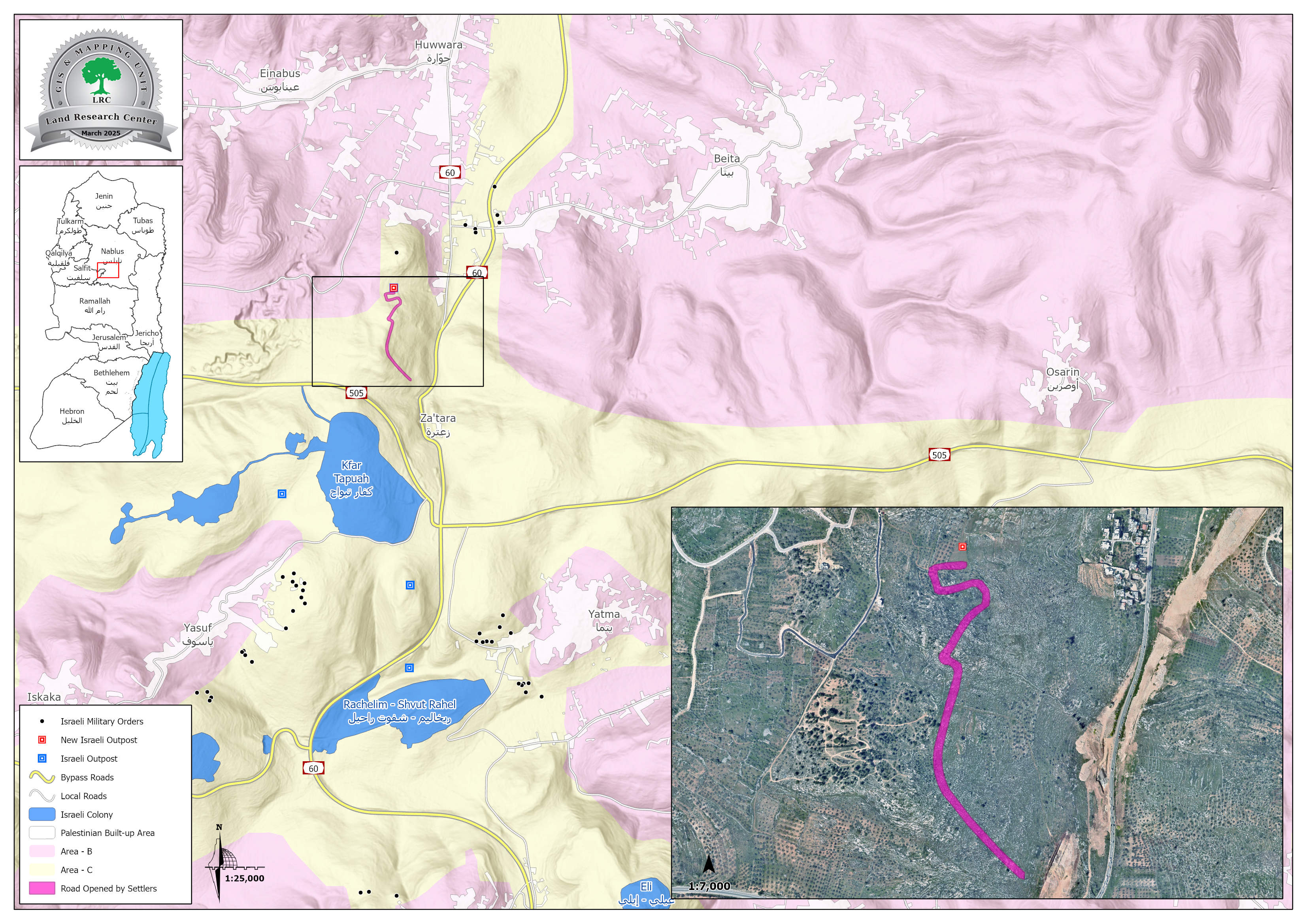
The settlers continue the land leveling operations that began approximately a month ago in Za’tara basin area, located southwest of Huwwara town.
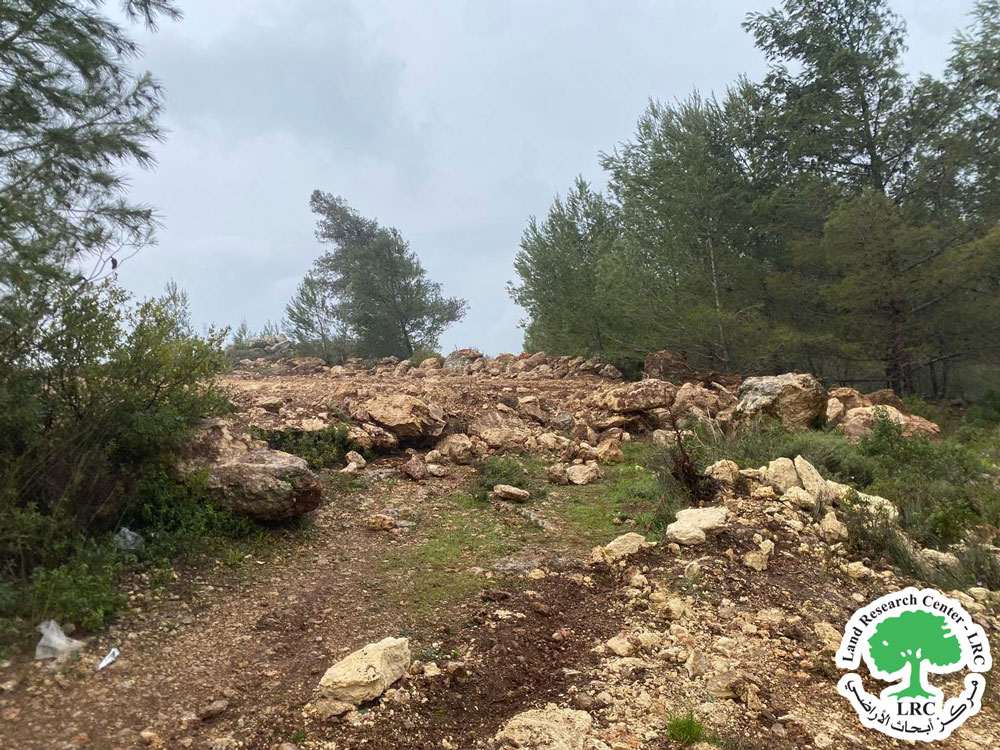
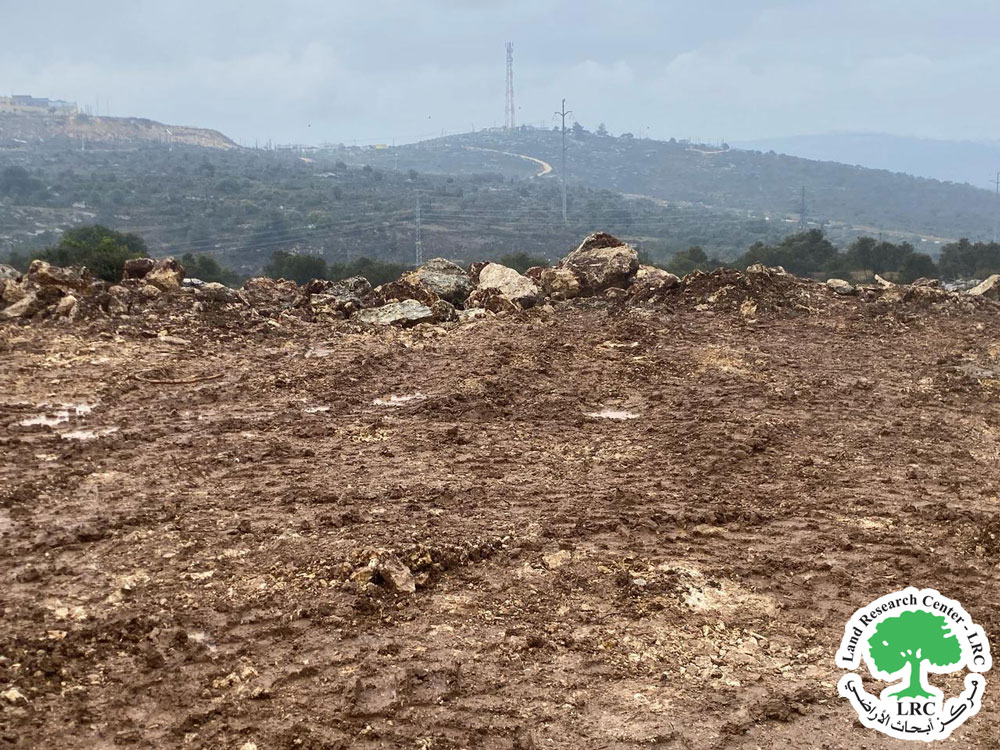
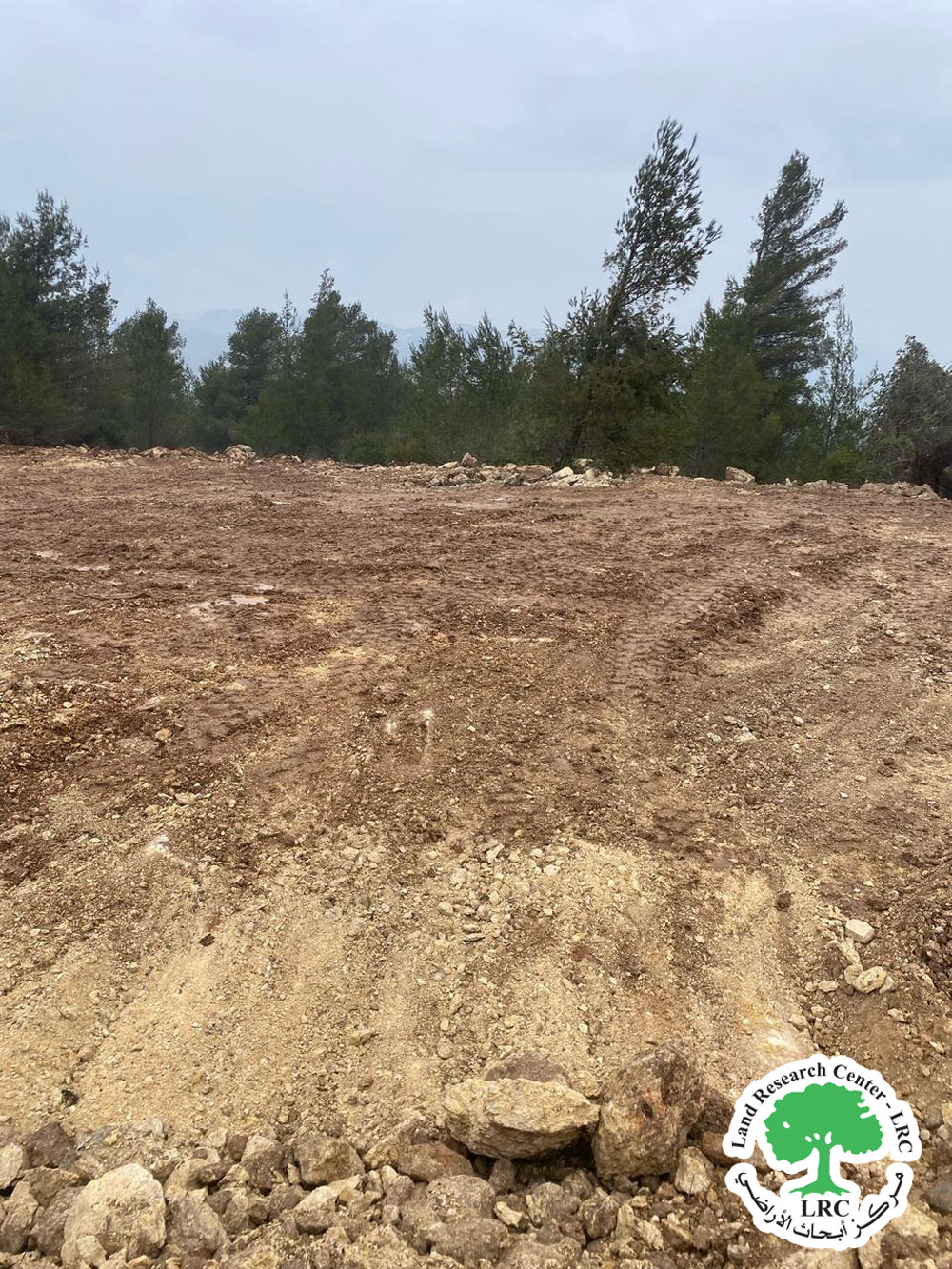
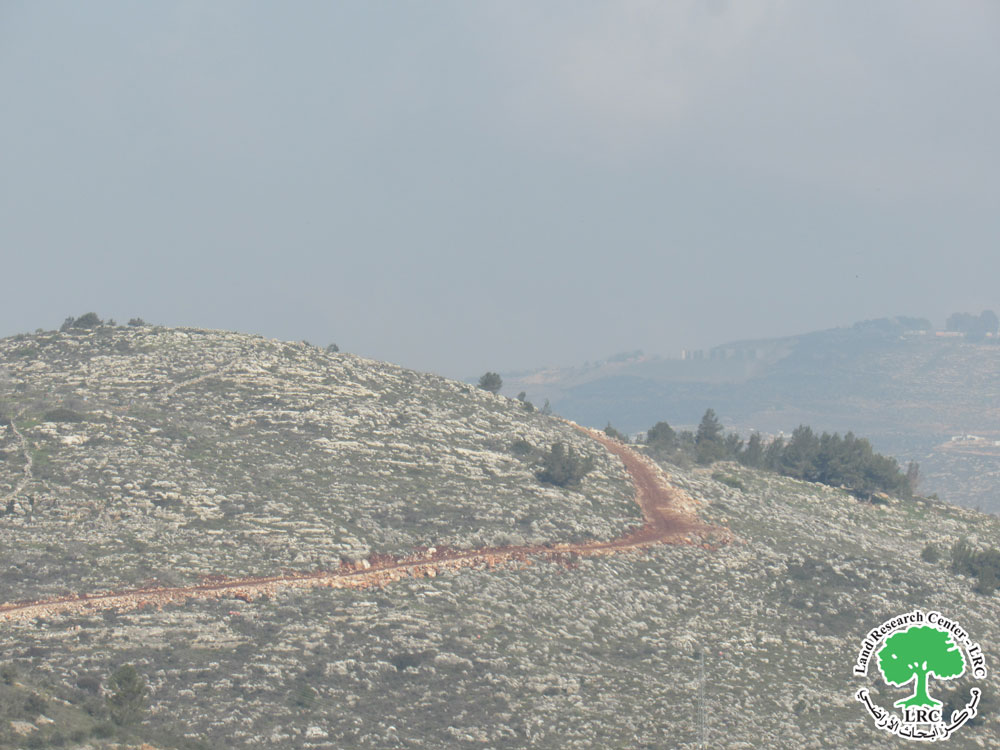
On Thursday morning, March,6th 2025 , according to recent developments, the settlers machinery began to pave a colonial road, which is considered an extension of the previous road, within Ras zaid forests’ area. The road is 300 meter long and 4 meters wide. That mean the settlers have taken full control of the area, covering 500 dunams of forested land.
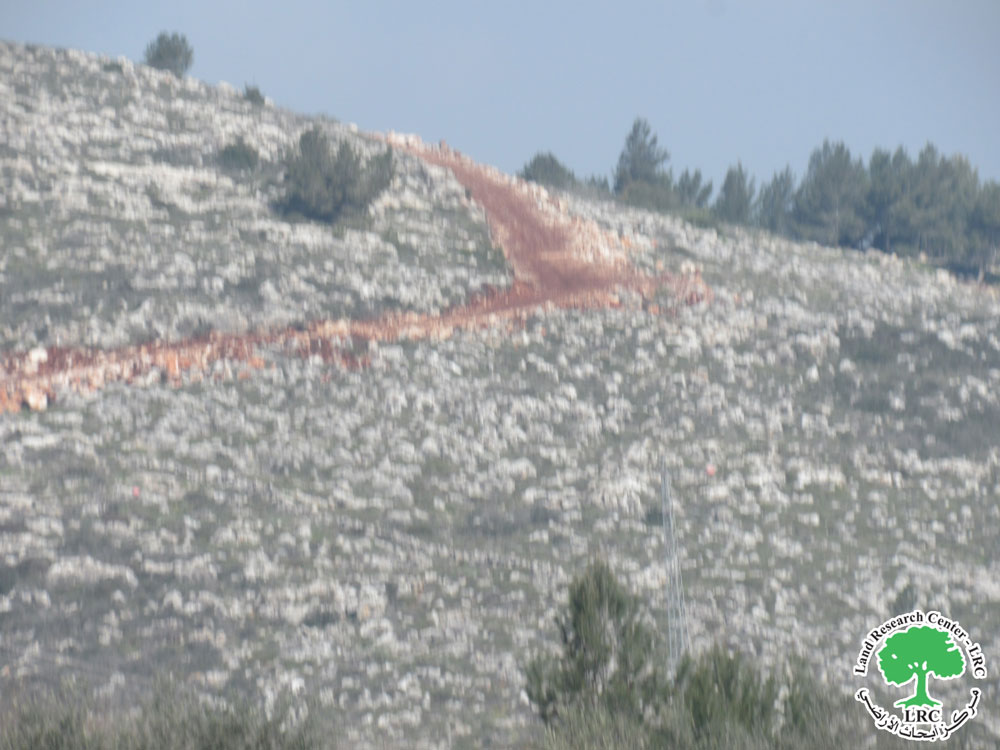
Photos 1-6 show the effects of excavation in Huwwara town
Ms. Rana Abu Hani, a member of Legal Information Office in Huwwara (Milad), stated:
“What is happening is a complete takeover to Huwwara lands from the south part. The beginning was with the construction of a 900meters long in Za’tara basin lands, which are owned for several farmers in Beta, Huwwara and Yasuf Villages.’’
Today, the land leveling continues to reach the forested area in Ras Zaid. A region that has historically served as a recreational space for the residents of Huwwara town, Aimed the settlers’ control over vast areas of the towns land. This marks a step toward a very dangerous phase, paving the way for complete control over the remaining lands.
In late February, a field research team documented the settlers’ construction of a colonial road on the lands of Za’tara basin. What is currently happened is the continuation of this road, which is planned to establish a new settlement complex on the land of the entire area. This mean complete control over the lands of Huwwara town, further fragmenting the Palestinian residential areas and significantly isolating the main road linking the northern and central West Bank. The targeted area is of great strategic importance, as it is a crossroads connecting the northern and central occupied West Bank.
A Brief Overview of the Town of Huwwara:
Huwwara is located 8 km south of the city of Nablus, along Bypass Road No. 60, which connects the northern and southern parts of the West Bank. This road is commonly referred to as the "Death Road" due to the high number of daily accidents, including vehicle collisions and pedestrian run-overs. The Huwwara municipality has repeatedly attempted to maintain the road and install warning signs, but the Israeli occupation obstructs these efforts and refuses to allow even basic safety signs.
As of 2017, the population of Huwwara stands at 6,659 residents, primarily divided into three main families: 'Awad, Dmeidi, and Khammous. Additionally, about 3% of the town’s population consists of refugees.
The total area of Huwwara spans 8,520 dunams, with 1,116 dunams designated for built-up areas. The Israeli settlement of "Yitzhar" is established on village lands, having seized 331 dunams. Furthermore, Bypass Road No. 60 has expropriated an additional 430 dunams from the town’s land.
Land Confiscation Violates International Laws:
The actions of settlers in the occupied Palestinian territories, including the confiscation of Palestinian lands and the establishment or expansion of settlements, constitute a violation of Palestinian rights and international laws. Below are key legal provisions and international treaties that explicitly prohibit Israeli settlement activity in Palestinian territories and safeguard the rights and properties of civilians in occupied lands, along with relevant United Nations resolutions.
The Lahai Convention of 1907
- Article 46: An occupying power is prohibited from confiscating private property.
- Article 55: The occupying state acts as an administrator of the occupied land and must treat its properties as private assets, ensuring their protection.
The Fourth Geneva Convention of 1949
- Article 49: The occupying power is forbidden from transferring its own population into the occupied territories or taking any measures that would alter the region’s demographic composition.
- Article 53: The occupying forces are prohibited from destroying private, collective, state, or any other property belonging to authorities within the occupied country.
- Article 147: The destruction or unlawful seizure of property on a large scale, without military necessity and in an arbitrary manner, constitutes a grave breach of international law.
مشروع: حماية الحقوق البيئية الفلسطينية في مناطق "ج" SPERAC IV - FCDO
Disclaimer: The views and opinions expressed in this report are those of Land Research Center and do not necessarily reflect the views or positions of the project donor; the Norwegian Refugee Council.
إخلاء المسؤولية: الآراء ووجهات النظر الواردة في هذا التقرير هي آراء ووجهات نظر مركز أبحاث الأراضي ولا تعكس بالضرورة وجهات نظر أو مواقف الجهة المانحة للمشروع؛ المجلس النرويجي. للاجئين
show the excavation in the area